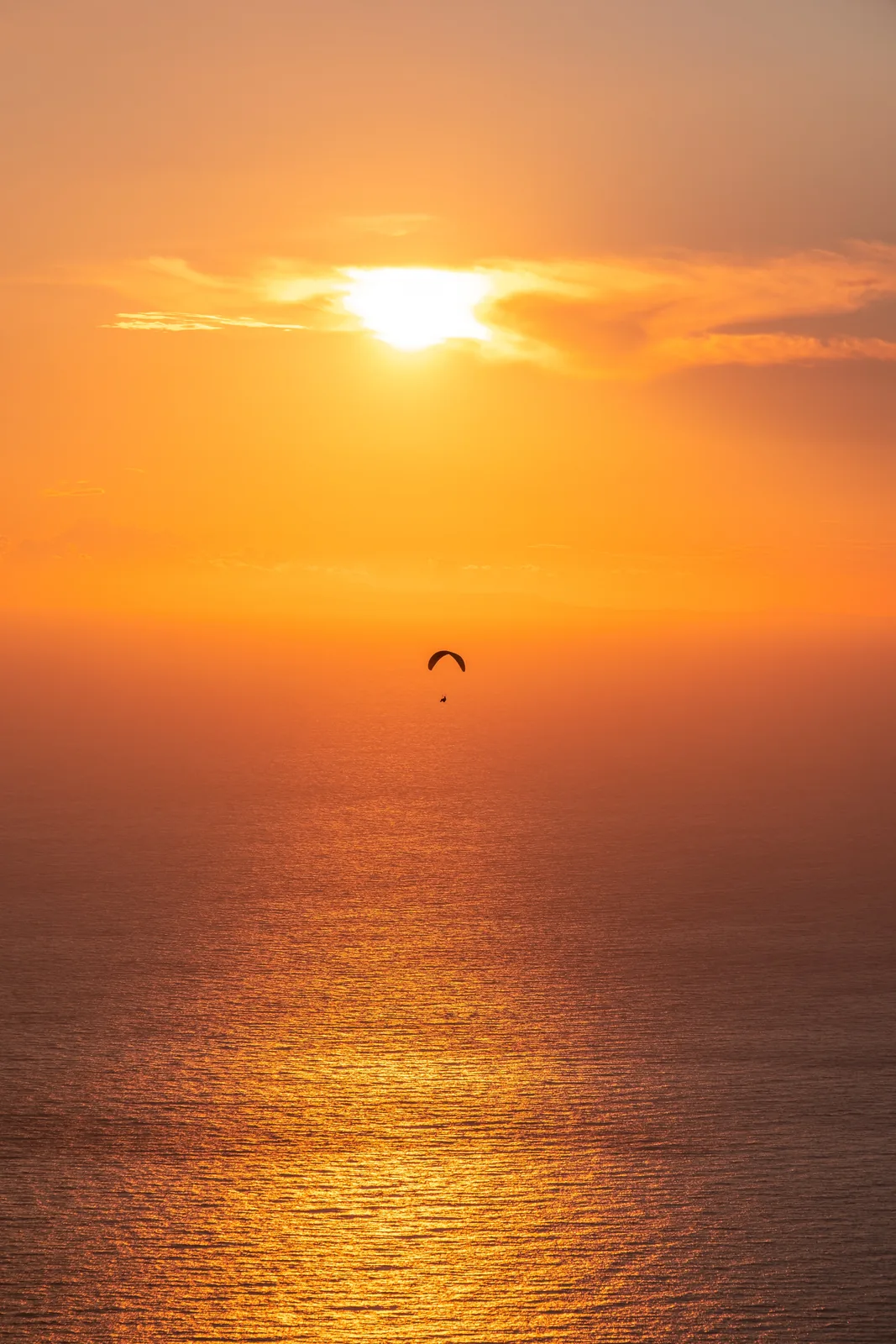
Paragliding depends on wind and weather, so choosing the right season and the right time of day greatly improves your chances of a perfect flight. Here is how the weather behaves at the Niterói ramp and how to plan around it.
Flying depends on the wind
Paragliding is a sport guided by nature. Unlike a boat trip or a hike, it only happens when the sky cooperates. We fly when the wind has the right direction and strength for our ramp at Parque da Cidade. Wind that is too light makes launching and staying up difficult; wind that is too strong, gusty or accompanied by rain stops the flight for safety reasons — a decision we never compromise on.
So rather than memorising climate tables, understand the logic: some seasons and hours greatly increase the probability of a good day, but nature always has the final word. Our job, with more than 19 years on this ramp, is to read those conditions for you and only launch when it is safe and enjoyable.
💡 Visitors usually compare the two Rio ramps before booking. In Niterói there is no separate club fee and the flight photos are included — details in the guide to paragliding in Rio de Janeiro.
The seasons in Niterói
Autumn (April to June)
A favourite among many pilots. Summer heat is over, rain becomes less frequent and the air tends to be drier and cleaner. The result is excellent visibility, often taking in most of Guanabara Bay, Sugarloaf and, on many days, Christ the Redeemer in the distance. Pleasant temperatures also make the flight more comfortable.
Winter (July to September)
Contrary to what many people expect, winter in Rio is great for flying. There are often runs of dry days with blue skies and stable air. It is rarely cold at sea level, but a few degrees drop at altitude, so bring a light jacket. This season offers many good windows, especially in the morning.
Spring (October to November)
Spring brings mild weather and a good frequency of flyable days, acting as a smooth transition between the settled winter and the summer heat. Keep an eye on the forecast, as late-afternoon instability starts to appear, but overall it is a generous season.
Summer (December to March)
Summer offers heat, blue sea and spectacular views, but it is the season that demands the most flexibility. Mornings often start beautiful and stable, while in the afternoon the sky frequently builds up into the typical Rio downpour. Prioritise earlier slots and watch the forecast closely. When the day cooperates, a summer flight is simply unforgettable.
Morning or late afternoon?
Morning usually has the calmest, most stable air, because the sun has not yet heated the ground enough to create turbulence. It is ideal for anyone who wants a serene flight — perfect for first-timers — and the light is clear for photos.
Midday brings thermals, rising columns of warm air that make the flight livelier. Many people love that; we always assess their strength before launching and adapt the flight to your profile.
Late afternoon brings the golden hour. The air calms again, the light turns orange and the sunset over Guanabara Bay produces the best images of the day. Remember that days are shorter in winter, so this window arrives earlier. More in sunset paragliding in Niterói.
How to follow conditions
- Live conditions widget on our home page, with a direct wind reading for our ramp.
- Wind and rain forecasts: look at wind direction and rain probability rather than temperature alone.
- Message us. We watch the ramp closely and can tell you, from local experience, whether the day looks promising.
Still, a forecast is a probability, not a certainty. Conditions can change within an hour, and a day that looked closed sometimes opens a perfect window late in the afternoon. The final confirmation always happens on the day, with a reading of the real conditions at the ramp.
What postpones a flight
- Wind outside the ideal range: too light, too strong or too gusty.
- Rain or storms: showers, low cloud reducing visibility or any risk of thunder.
- Wrong wind direction: even at a good strength, the wind must come from the right side for the ramp.
In any of those cases, rescheduling is free: you do not lose what you paid and you choose a new date. The idea is simple — your flight happens at the best possible moment, never in a rush. The full policy is in what if it rains?.
How many spare days to allow
If you are coming from abroad, do not leave the flight for the last day of your trip. A good rule is to allow two to three flexible days within your itinerary. If the first day does not cooperate, there are still other chances to rebook without stress. Travellers with only one available day can of course still fly, but they depend more on luck.
If your trip is short, book in advance and keep the early morning as your option — it is usually the most stable window and the least likely to be rained out, especially in summer. And if the weather closes on every planned day, you lose nothing: what you paid stays valid for a future opportunity.
📚 References (Wikipedia): Niterói · paragliding
Planning your trip?
Tell us your dates and we will say which days and times look best for flying, so you can plan the rest of your trip around them.
💬 Book on WhatsApp