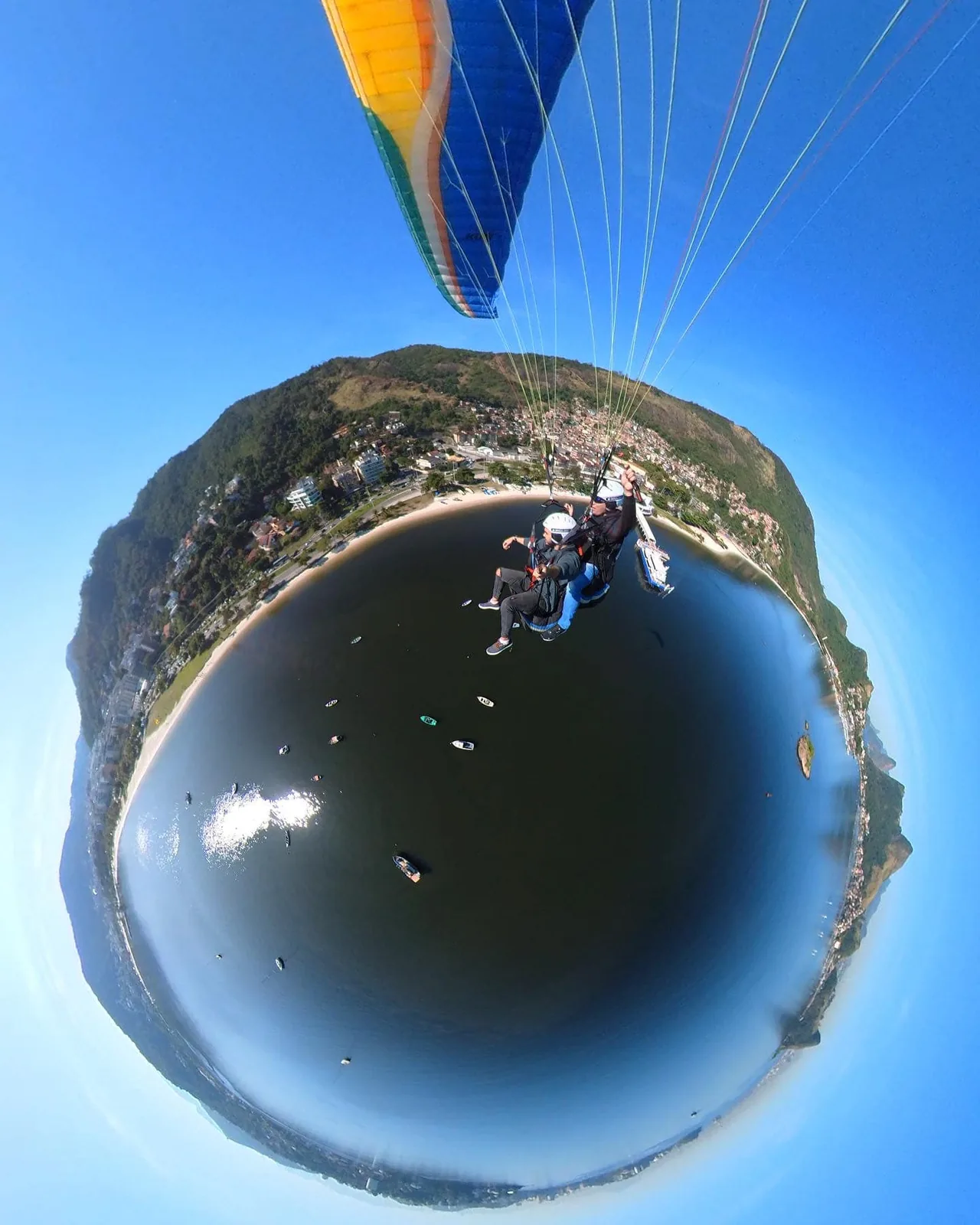
Straight to the point: paragliding is a controlled-risk sport. There is risk — as in almost any outdoor activity — but it is managed with method, certified equipment, a licensed instructor and, above all, respect for the weather. When those three pillars are in place, a tandem flight becomes a calm, safe experience that is open to people who have never flown before.
Is paragliding dangerous?
It would be dishonest to call paragliding "risk-free". No air sport is. What we can say responsibly is that the risk exists and can be reduced consistently when the flight is done within technical standards and common sense. Most of what goes wrong in free flight does not come from the equipment itself, but from decisions: flying in unsuitable conditions, in a hurry, unprepared, or with gear that has not been maintained.
So the better question is not "is it dangerous?" but "how is that risk being managed?". On a tandem flight, that management is entirely in the hands of an experienced instructor. You do not assess the wind, make technical calls or operate anything — your job is to follow simple instructions and enjoy the view. Reading the conditions, choosing the moment and controlling the wing are the responsibility of someone who has been flying for years. Here, that means more than 19 years of accumulated experience.
We will not quote accident statistics: numbers out of context either frighten or mislead. What matters to a passenger is concrete — the equipment is certified, the pilot is licensed, and the flight only happens in safe conditions.
🗺️ Coming from Rio de Janeiro? The Parque da Cidade ramp is on the other side of Guanabara Bay: you can leave Copacabana and be flying in about an hour and a half, by ferry or over the bridge. See the full guide to paragliding in Rio de Janeiro.
The equipment: wing, reserve and certification
Safety starts with the gear. A paraglider is not simply "a parachute": it is an unpowered aircraft designed to glide in a stable way. Three points deserve your attention:
- A certified wing: paragliders go through certification tests that assess stability and behaviour in different situations. A tandem wing is sized for two occupants and chosen for smooth, predictable responses — not for acrobatics.
- The reserve parachute: besides the main wing, tandem equipment carries a reserve parachute. It is an extra safety resource, used only in extreme situations, and the instructor knows exactly how and when to use it.
- Harness, helmet and connections: the harness is padded and connects you to the instructor and to the equipment through carabiners and buckles that are checked item by item before every flight.
Just as important as having good equipment is keeping it inspected. At Linhares Fly the gear is certified and inspected on a regular schedule: wings need line, fabric and stitching checks, and a reserve must be repacked within its deadline. Well-maintained equipment is the first sign of a serious operation — and it is always fair to ask about it before you fly.
💡 Tip: when booking, ask whether the equipment is certified and how often it is inspected. A serious school answers straight away and without hesitation. Transparency about gear is an excellent safety indicator.
The instructor makes the difference: CBVL-licensed pilots
If one single factor weighs most on your safety, it is who is in command. On a tandem flight the passenger is attached to an instructor licensed by the CBVL — Confederação Brasileira de Voo Livre, Brazil's national free-flight body. That licence is not red tape: it certifies that the pilot went through training and assessment and follows the rules of the organisation that governs free flight in the country. Our pilots are also registered with ANAC as air-sports pilots under RBAC 103.
An experienced instructor does what no equipment can do on its own: reads the wind and the terrain, decides the best instant to launch, flies the wing smoothly, chooses comfortable turns and plans the landing well in advance. He also knows what to do if something does not go as expected — and, more importantly, knows when not to fly. The ability to say "not today" is one of the marks of a true professional.
At Linhares Fly, flights are conducted by an instructor with more than 19 years in the activity. That shows in the experience of those who have flown with us: a 5.0 rating on Google from 73 reviews. A reputation built over years is hard to fake, and it says a lot about how safety is handled day to day.
When we do NOT fly (the weather decides)
This is perhaps the most important part, and the least understood from the outside: in paragliding, the weather has the final word. Wind that is too strong, irregular gusts, rain approaching or unstable conditions are reason enough to postpone. A good instructor does not hesitate on that call, even when everything is booked and the passenger is full of expectation.
We know rescheduling is frustrating in the moment — but that is exactly where safety proves itself. When conditions are not suitable, we reschedule at no cost. We would rather you wait for a good day than go up on a doubtful one. To improve your chances of catching a perfect day, plan your date with the seasons in mind: we gathered the best windows in the guide to the best time of year to fly in Niterói.
How to choose a safe school (checklist)
Not every tandem operation is the same. Before booking, use this simple checklist:
- CBVL-licensed instructor: confirm the pilot holds a current tandem licence. This one is non-negotiable.
- Certified, inspected equipment: ask about the wing, the reserve and how often gear is checked.
- Respect for the weather: does the school reschedule when conditions are poor? If the answer is "we fly in any weather", walk away.
- Proven reputation: look for real reviews, years in operation and track record.
- Transparency: a good professional explains risks, procedures and limits plainly, and answers your questions patiently.
- Safety briefing: before launch you should receive clear instructions about take-off and landing.
To check who can take part, see the guide on who can go paragliding, which covers weight, age and health conditions.
Safety at the Parque da Cidade ramp in Niterói
The launch ramp at Parque da Cidade, in Niterói, sits at about 270 metres and is one of the best known in Brazil — and not by chance. It has consolidated infrastructure, a tradition in free flight and a privileged view of Guanabara Bay, Sugarloaf and Christ the Redeemer. That combination makes it an ideal spot for tandem flights: organised access, adequate launch space and landing areas that local pilots know well.
Knowing a ramp deeply is in itself a safety factor. A local instructor knows how the wind behaves there at different hours, which moments of the day are best, and how to set up the landing approach with margin. That is the difference between flying somewhere you pass through and flying somewhere you have mastered over years.
The tandem flight lasts 10 to 20 minutes in the air, takes passengers from 20 to 110 kg, requires no experience and starts at R$ 379. If you want to know what the experience is like from start to finish, the guide your first tandem flight, step by step describes every stage, from arrival to landing.
In short: safe when done properly
Paragliding is not "risk-free" — no air sport is, and anyone promising that is not being honest. But it is a controlled-risk activity that becomes safe and enjoyable when it brings together certified equipment, a licensed instructor and absolute respect for the weather. Choose carefully who you fly with, ask your questions without embarrassment, and allow yourself one of the most memorable experiences there is.
📚 References (Wikipedia): paragliding · Niterói
Ready to fly with a licensed instructor?
Tandem paragliding from the Parque da Cidade ramp in Niterói, from R$ 379 per person, with photos and video included.
💬 Book on WhatsApp