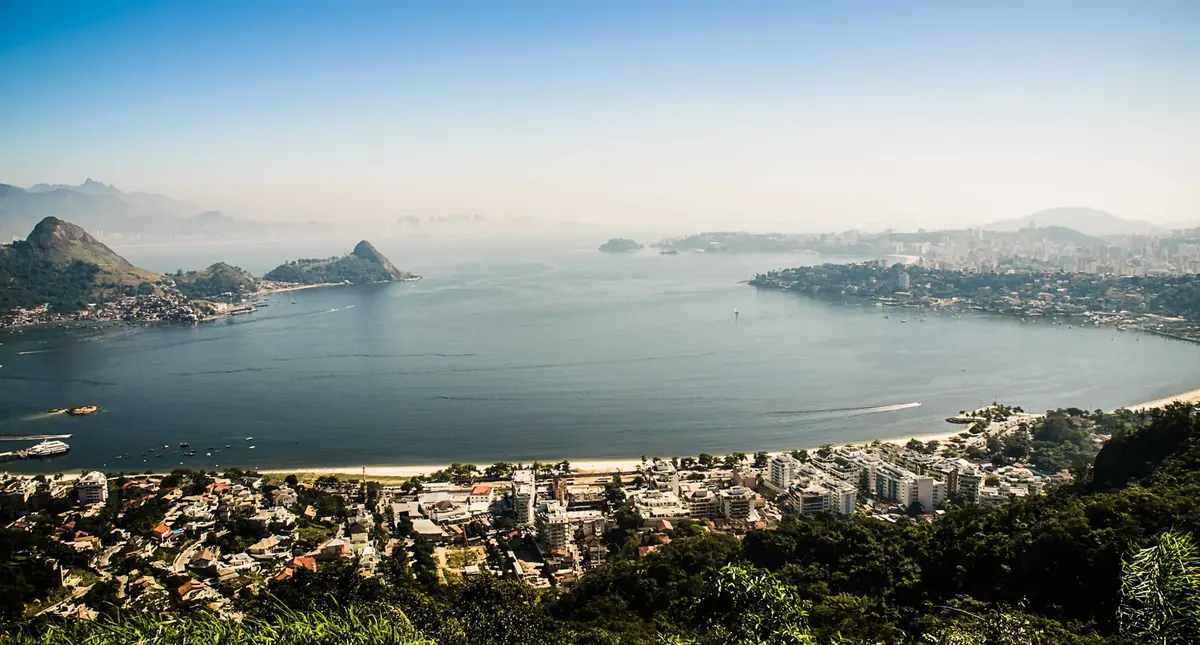
Niterói sits on the eastern shore of Guanabara Bay, directly across from Rio de Janeiro — and that position explains most of what makes it special: the view, the beaches on two different waters, and a skyline of Oscar Niemeyer buildings facing the most famous postcard in Brazil.
Where it is
The city borders the bay and the Atlantic, linked to Rio by the Rio–Niterói Bridge and by ferries from Praça XV. The crossing takes about 20 minutes by boat, which makes a day trip from Rio straightforward.
A short history
Founded in the 16th century on indigenous land, Niterói grew as a port and administrative centre and was the capital of the old state of Rio de Janeiro until 1975. Traces of that history remain in the Santa Cruz Fortress, the old centre and the colonial churches.
Why the "Smile City"
The nickname reflects the city's reputation for quality of life and its relaxed, welcoming character — a place with beaches, parks and a strong cultural life at a calmer pace than its neighbour.
Nature and parks
Parque da Cidade crowns Morro da Viração with the city's best lookout and the paragliding ramp. Serra da Tiririca State Park protects Atlantic forest, rocky peaks and trails between Niterói and Maricá. The Botanical Garden adds a quieter green space near the centre.
Niemeyer architecture
The MAC, inaugurated in 1996, is the icon: a disc over the bay with a circular window framing Rio. The Caminho Niemeyer extends that language along the waterfront, with the Popular Theatre and Juscelino Kubitschek Square.
Culture and education
Theatres, cinemas and cultural centres keep an active calendar, and the Fluminense Federal University (UFF) gives the city a strong student presence, especially around Gragoatá and the centre.
Beaches
Ocean beaches: Itacoatiara, Camboinhas, Piratininga, Itaipu and Sossego — open sea, surf and headlands. Bay beaches: Icaraí, São Francisco, Charitas and Jurujuba — calm water, promenades and a constant view of Rio. The guide is in the ocean beaches of Niterói.
Neighbourhoods
Icaraí is the best known, with its seafront and restaurants; São Francisco and Charitas are quieter and closer to the ramp; the ocean region holds the surf beaches; and the old centre keeps the ferry terminal, the theatres and the historic streets.
Food
Jurujuba is famous for seafood and locally farmed oysters. Icaraí and São Francisco concentrate seafront restaurants and bars, and the centre has traditional places that have been serving for decades.
Outdoor adventure
This is where Niterói surprises visitors: a free-flight ramp with the whole of Rio in front of it, hiking such as the Costão de Itacoatiara, surf, stand-up paddle and snorkelling on the headlands — all within a short radius. The full list is in adventure sports in Niterói, and the flight itself in the guide to paragliding in Rio de Janeiro.
📚 References (Wikipedia): Niterói · Oscar Niemeyer
See the city from the air
A tandem flight from Parque da Cidade shows Niterói and Rio in one go. From R$ 379, photos and video included.
💬 Book on WhatsApp